Anti-CAV1 Polyclonal Antibody
Ordering
Available Variants| Availability & Stock | Pack | SKU | Price (EUR) |
|---|---|---|---|
|
Available – Dispatch in 14 days
Global Network - International delivery
|
50ul | CAB.20324-50ul | €200.00 |
|
Available – Dispatch in 14 days
Global Network - International delivery
|
100ul | CAB.20324-100ul | €335.00 |
| Catalog No | CAB.20324 |
|---|---|
| Product Name | Anti-CAV1 Polyclonal Antibody |
| Isotype | IgG |
| Calculated MW | 20kDa |
| Immunogen | A synthetic peptide of human CAV1 |
| Public Immunogen Range | 2-15aa |
| Host | Rabbit |
| Clone Type | Polyclonal Antibody |
| Reactivity | Mouse;Rat;Human |
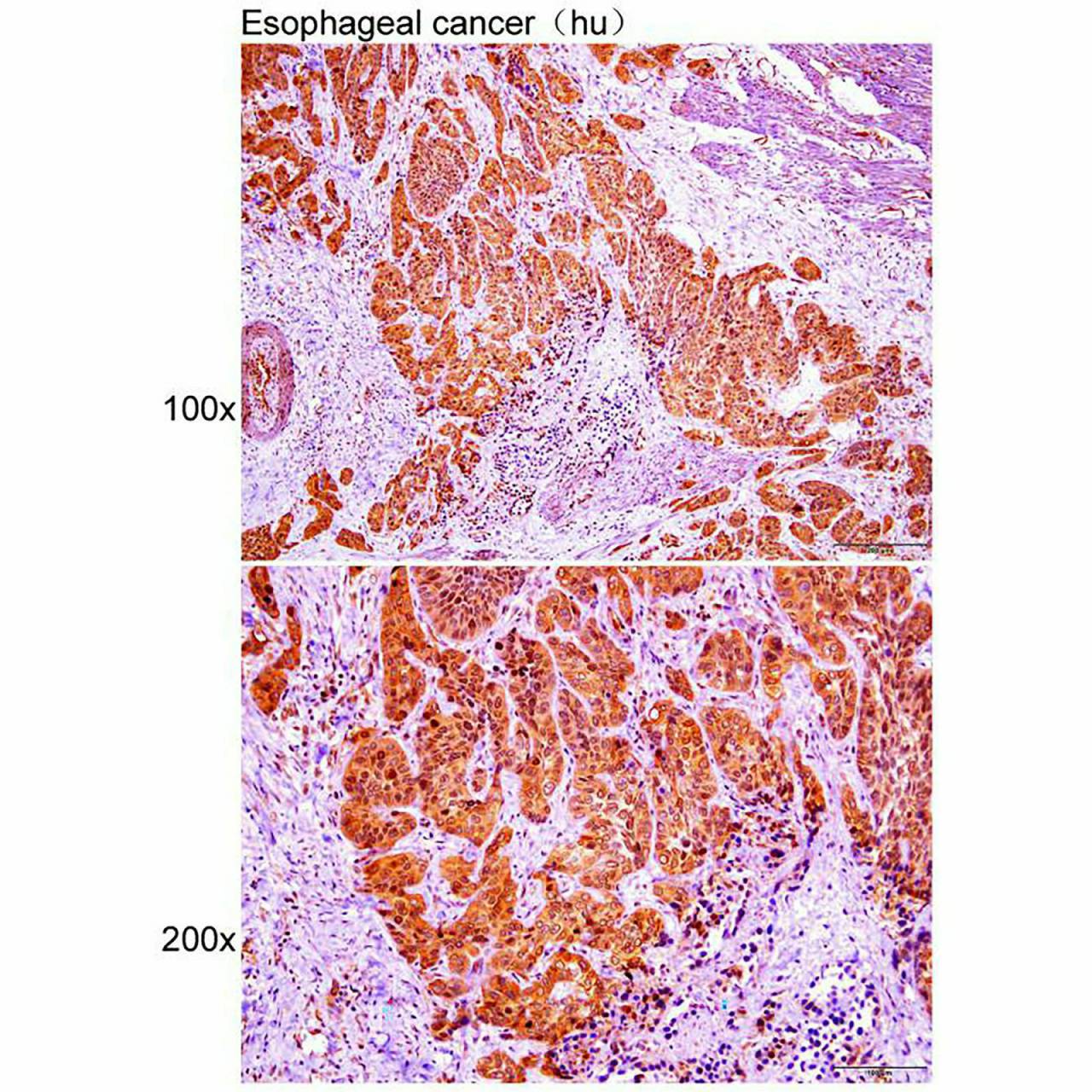
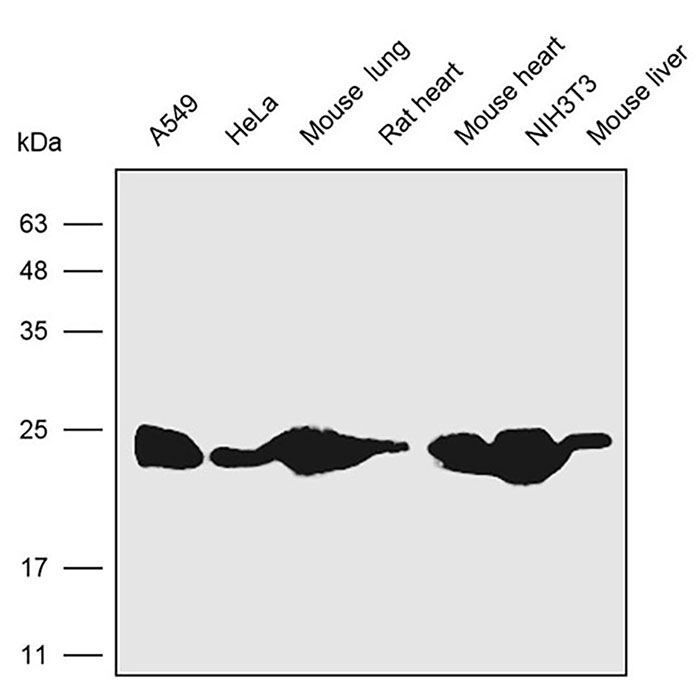
| Application | IHC-P;WB |
| Subcellular Location | Cytoplasm |
| Purification Method | CABfinity purification |
| Storage Buffer | pH7.4 PBS,0.05% NaN3,40% Glycerol. |
| Storage | Store at -20℃. Avoid freeze/thaw cycles. |
Background
The scaffolding protein encoded by this gene is the main component of the caveolae plasma membranes found in most cell types. The protein links integrin subunits to the tyrosine kinase FYN, an initiating step in coupling integrins to the Ras-ERK pathway and promoting cell cycle progression. The gene is a tumor suppressor gene candidate and a negative regulator of the Ras-p42/44 mitogen-activated kinase cascade. Caveolin 1 and caveolin 2 are located next to each other on chromosome 7 and express colocalizing proteins that form a stable hetero-oligomeric complex. Mutations in this gene have been associated with Berardinelli-Seip congenital lipodystrophy. Alternatively spliced transcripts encode alpha and beta isoforms of caveolin 1.
Protocol / Instructions
The Anti-CAV1 Polyclonal Antibody is designed to detect Caveolin 1 (CAV1) in various applications. Below are the protocols for the validated applications.
Reagents or buffers: RIPA buffer, SDS-PAGE, transfer buffer, blocking buffer, and ECL substrate.
Sample preparation: Lyse cells in RIPA buffer, then separate proteins by SDS-PAGE and transfer to a membrane.
Antibody incubation: Incubate the membrane with the Anti-CAV1 Polyclonal Antibody at a dilution of 1:1000-5000 in blocking buffer for 1-2 hours at room temperature or overnight at 4°C.
Washing or detection: Wash the membrane with washing buffer, then incubate with a secondary antibody conjugated to HRP. Detect the signal using ECL substrate.
Technical notes: The expected band size is approximately 20-25 kDa.
Reagents or buffers: Xylene, ethanol, antigen retrieval buffer, blocking buffer, and DAB substrate.
Sample preparation: Fix and embed tissue samples, then cut into sections. De-paraffinize sections with xylene and rehydrate with ethanol.
Antibody incubation: Incubate sections with the Anti-CAV1 Polyclonal Antibody at a dilution of 1:50-200 in blocking buffer for 1-2 hours at room temperature.
Washing or detection: Wash sections with washing buffer, then incubate with a secondary antibody conjugated to HRP. Detect the signal using DAB substrate.
Technical notes: Perform antigen retrieval using heat-mediated antigen retrieval in antigen retrieval buffer.
Precautions
Store at -20°C, handle with gloves, use positive and negative controls, and optimize antibody dilution for best results.
Validation Images