Anti-AARS Polyclonal Antibody
Ordering
Available Variants| Availability & Stock | Pack | SKU | Price (EUR) |
|---|---|---|---|
|
Available – Dispatch in 14 days
Global Network - International delivery
|
50ul | CAB.59072-50ul | €387.50 |
|
Available – Dispatch in 14 days
Global Network - International delivery
|
100ul | CAB.59072-100ul | €615.00 |
| Catalog No | CAB.59072 |
|---|---|
| Product Name | Anti-AARS Polyclonal Antibody |
| Isotype | IgG |
| Calculated MW | 107kDa |
| Immunogen | A synthetic peptide of human AARS |
| Public Immunogen Range | N/A |
| Host | Rabbit |
| Clone Type | Polyclonal Antibody |
| Reactivity | Rat;Human |
| Application | IHC-P;WB |
| Subcellular Location | Cytoplasm |
| Purification Method | CABfinity purification |
| Storage Buffer | pH7.4 PBS,0.05% NaN3,40% Glycerol. |
| Storage | Store at -20℃. Avoid freeze/thaw cycles. |
Background
The human alanyl-tRNA synthetase (AARS) belongs to a family of tRNA synthases, of the class II enzymes. Class II tRNA synthases evolved early in evolution and are highly conserved. This is reflected by the fact that 498 of the 968-residue polypeptide human AARS shares 41% identity witht the E.coli protein. tRNA synthases are the enzymes that interpret the RNA code and attach specific aminoacids to the tRNAs that contain the cognate trinucleotide anticodons. They consist of a catalytic domain which interacts with the amino acid acceptor-T psi C helix of the tRNA, and a second domain which interacts with the rest of the tRNA structure.
Protocol / Instructions
The Anti-AARS Polyclonal Antibody is designed for the detection of AARS in various applications. For optimal results, follow the recommended dilutions and protocols.
Reagents or buffers: Tris-buffered saline with Tween 20 (TBST), non-fat dry milk, and a chemiluminescent substrate.
Sample preparation: Prepare cell or tissue lysates, separate proteins by SDS-PAGE, and transfer to a membrane.
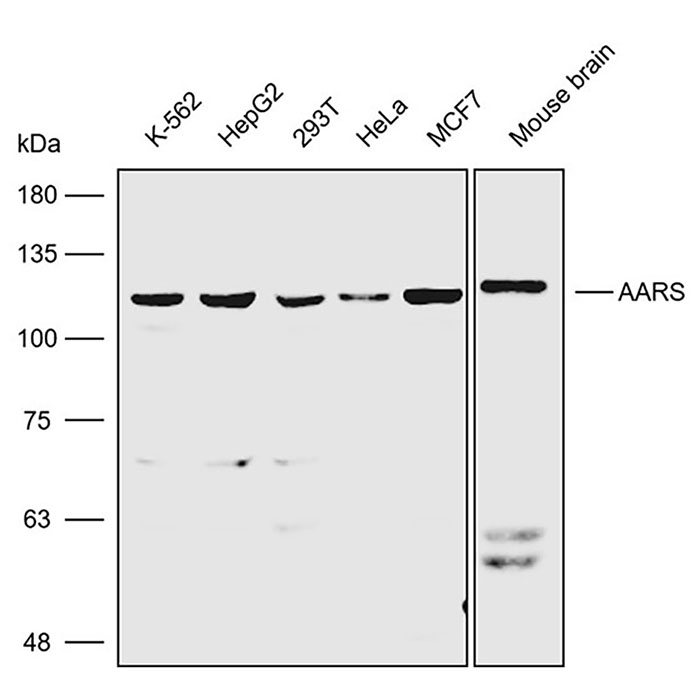
Antibody incubation: Incubate the membrane with the Anti-AARS Polyclonal Antibody at a dilution of 1:200-1000 in TBST with 5% non-fat dry milk for 1-2 hours at room temperature or overnight at 4°C.
Washing or detection: Wash the membrane three times with TBST, followed by incubation with a secondary antibody conjugated to horseradish peroxidase. Detect the signal using a chemiluminescent substrate.
Technical notes: The expected molecular weight of AARS is approximately 96-110 kDa.
Reagents or buffers: Xylene, ethanol, antigen retrieval buffer, and a peroxidase substrate.
Sample preparation: Prepare paraffin-embedded tissue sections, deparaffinize, and rehydrate.
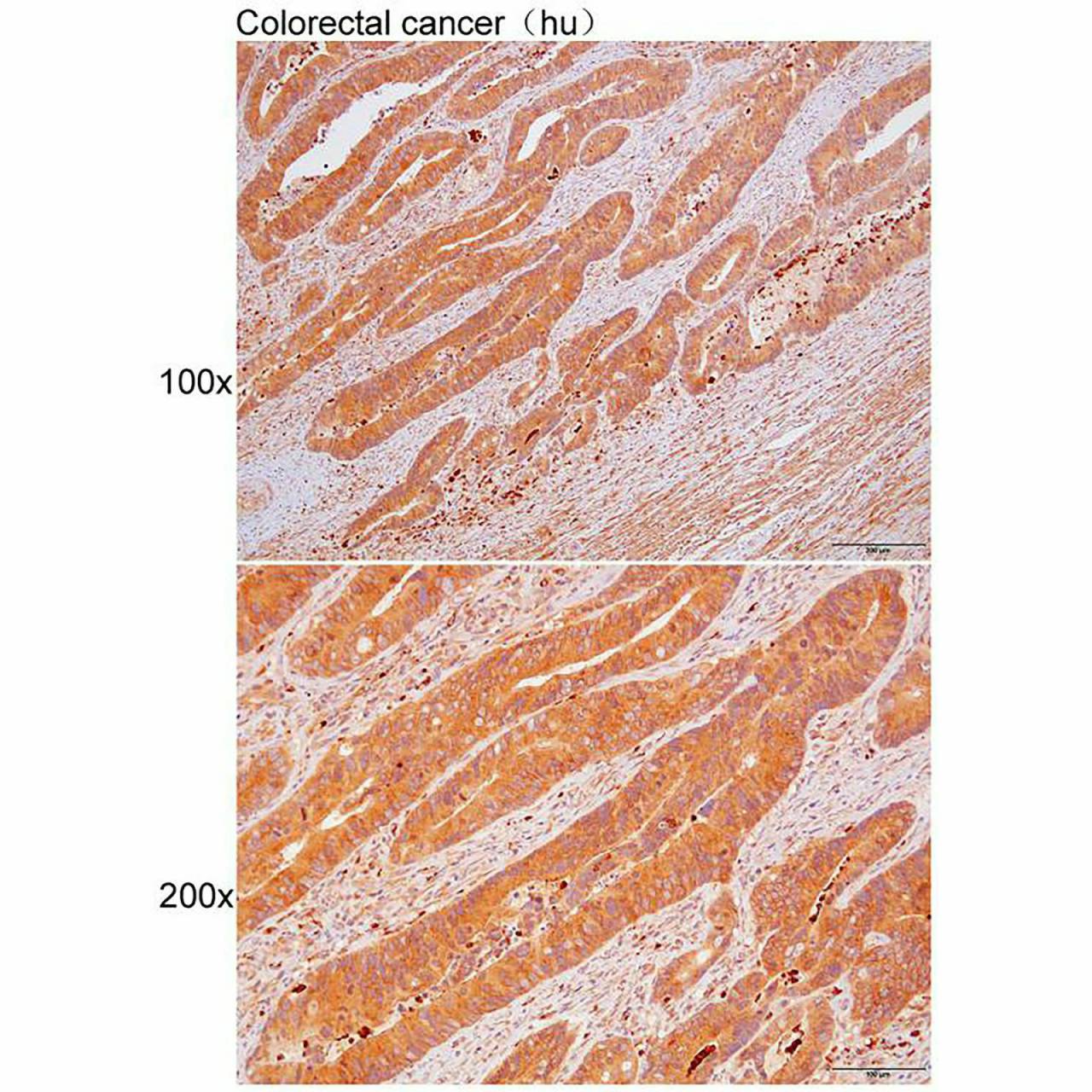
Antibody incubation: Incubate the sections with the Anti-AARS Polyclonal Antibody at a dilution of 1:25-100 in a suitable antibody diluent for 1-2 hours at room temperature or overnight at 4°C.
Washing or detection: Wash the sections with phosphate-buffered saline, followed by incubation with a secondary antibody conjugated to peroxidase. Detect the signal using a peroxidase substrate.
Technical notes: Antigen retrieval using heat-mediated methods may enhance staining.
Precautions
Store at -20°C, handle with gloves, use positive and negative controls, and optimize antibody dilutions for best results.
Validation Images